

Logistics Tenders: How to Get Better Prices and More Control with 4Shipper
When the tender’s topic is brought up at a company, it often signals weeks of intense work for the logistics team as they manage Excel spreadsheets, emails, carrier inquiries, and changing terms. On paper, it’s about selecting the best carrier.
In practice, it’s often a test of whether the company truly has its data, rates, and communication under control. If the tender fails, the negative consequences become apparent very quickly.
Why isn’t a tender just an “Excel exercise”?
We all know that management wants to see a 10% savings, but we know that sometimes we pay for it with service quality. A tender is full of numbers in Excel, but what you really need from carriers is:
- transparency, not just the lowest price,
- integration into your internal systems,
- high-quality customer service,
- stability and capacity,
- flexibility during seasonal peaks.
What are the biggest challenges in a tender from the clients’ perspective?
Data chaos
Logistics professionals in charge of the entire procurement process are drowning in chaos and disorganized data. Their data is stored in various locations, without any structure or scalability. They have incomplete and inaccurate information, which leads to poor decisions. At the same time, they spend a disproportionate amount of time tediously searching for the necessary files. Last but not least, there are security risks and a loss of oversight regarding who has access to the data.
Internal Pressure
Management often focuses solely on the cost of transportation. The cheapest bid may not be the right choice. This bid usually results in frequent complaints and crisis management. Finding the ideal balance between a low price and a reliable shipping partner is one of the most difficult tasks in the entire bidding process
Fear of Change
Do you know that feeling when you have to change a well-established procedure? Or start something completely new? In today’s fast-paced environment, where everything is constantly changing, you have to jump on the bandwagon of digitalization, or else you’ll miss the boat. Sometimes, it’s precisely the fear of change that is the biggest obstacle to a company’s success.
How is the logistics market changing, and what do you need to prepare for?
The logistics market has changed significantly in recent years. The days when clients could simply dictate the terms are gradually coming to an end. Today, carriers also choose who they want to work with. It’s no longer just about price, but also the quality of the assignment, transparent communication, fair terms, and the ability to plan ahead.
That’s why it’s important to work with accurate data and clear requirements during tenders. The better a company can define routes, volumes, seasonality, expectations, and contractual terms for carriers, the more relevant offers it will receive.
ESG is also becoming a major topic. In logistics, it is often perceived as just another administrative burden, but in practice, it can also help in selecting carriers. Carriers who can provide and work with emissions data often demonstrate a higher level of preparedness, transparency, and the ability to respond to the demands of modern clients.
Therefore, a tender is no longer just about who offers the lowest price. It’s about who can deliver reliable service, fair cooperation, and data that can inform future decision-making over the long term.
Tools: How to Make Your Life Easier (and Not Go Crazy Over Emails)
Do you know that feeling when tender season rolls around and you know you won’t be able to catch a break? Follow-up questions from carriers, changes to the scope of work from management, bid evaluations, transparency checks, dozens of emails, phone calls, and a host of other small tasks waiting for you.
- Why Excel Is No Longer Enough
Excel can be a good starting point, but these days it’s no longer enough. It carries a higher risk of errors, the possibility of losing important information, and multiple versions of files. The biggest loss of control in Excel lies in communication between carriers and the client. This communication must take place via emails and phone calls, which aren’t standardized or traceable throughout the entire process.
- What a Modern Tendering Tool Must Be Able to Do
The most important thing is to realize that the tool you choose for managing tenders must meet the actual needs of you and your business. There are several platforms on the market today that can speed up and simplify the entire tendering process. It is very important to define at the outset which platform features are key for you.
With 4Shipper, you manage all freight tenders on a single digital platform. Carrier quotes, contract rates, routes, reports, documents, and communication are all integrated into a single workflow. This gives you greater control, better price transparency, and faster decision-making.
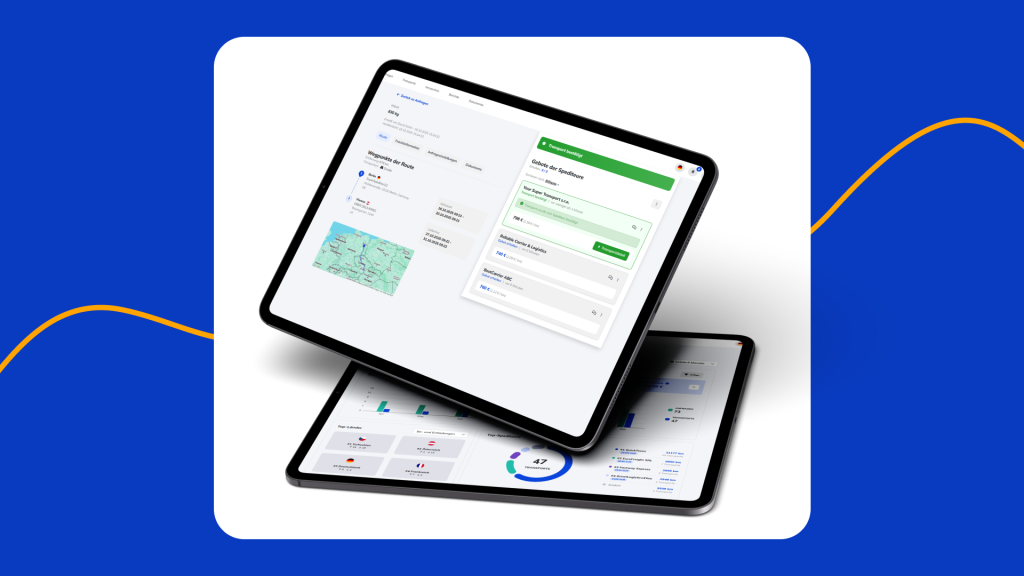
How 4Shipper Simplifies Logistics Tendering
1. A Single Overview of the Entire Tender
All tenders are available in one place with clear status updates, prices, contract validity, and an overview of participating carriers.
Benefit: You have a better overview of the entire selection process. Instead of searching through Excel spreadsheets, emails, or old documents, you can see all important information on a single platform.
2. Fair Comparison of Carrier Offers and Team Collaboration
Carrier offers, prices, and terms are available in a structured format that makes it easy to compare individual options. Internal teams can see all the essentials in a single workflow.
Benefit: Your logistics, finance, and procurement teams can make decisions faster, more transparently, and based on real data. These teams can collaborate with each other without losing data. The choice of carrier is thus based not only on the lowest price, but also on terms, quality, and long-term reliability.
3. Contract, Rate, and Validity Management
In 4Shipper, you can manage long-term and medium-term contracts with carriers, including prices, routes, contract terms, and validity periods.
Benefit: You keep contract rates under control, reduce the risk of working with outdated prices, and gain greater stability when planning shipping capacity.
4. Spot and Contract Shipments in a Single Workflow
If contracted shipping isn’t the ideal solution in a specific situation, you can handle spot requests right within the same platform.
Benefit: Your teams don’t need to use separate tools for contracts and spot shipments. All data remains interconnected, giving you a better overview of prices, decisions, and trends in shipping costs.
5. Communication and Documents in One Place
Communication with carriers takes place directly on the platform and remains linked to a specific tender. You have documents, requests, contracts, and shipping data all in one place.
Advantage: This reduces the number of emails, phone calls, and lost information. Every message, agreement, or change in terms is easily traceable and accessible to everyone working on the tender.
6. Reporting and Analytics for Better Decisions
A unified data structure, automated reports, and analytics help you track tender performance, compare carriers, evaluate prices, and identify areas for improvement.
Benefit: You make decisions based on data, not guesswork. Reporting helps logistics, procurement, and finance teams better understand how prices are evolving, which carriers deliver the best value, and where opportunities for savings or optimization arise.
Summary: How to Win a Tender (for Both Parties)
- If you want the tender to be successful for both the shipper and the carriers, you need to work with accurate input data and clear specifications. The higher the quality of the input data, the more relevant the bids you’ll receive.
- It’s important to communicate your long-term needs to carriers, not just the current price.
- The tender doesn’t end with the signing of the contract. What’s important is the subsequent transparent communication and mutual feedback.
Do you want to keep your tenders, contract rates, communication with carriers, and reporting under control? See how 4Shipper can help you simplify the entire tender process, from submission to decision.