Smart Tachographs 2026 and Freight Rates: What Does Our Data Show?

Smart tachographs are no longer just a concern for carriers. Their impact is now being felt by companies buying freight transport as well. Express van transport rates are currently 38% above their 12-month average in 2026. With the average rate reaching €0.92/km, businesses are facing growing pressure on their transport budgets and freight procurement processes.
However, higher prices are only part of the story. Since the extension of tachograph requirements, van availability, route planning and the time needed to arrange transport have all changed. Logistics teams are now facing challenges that were previously less common in express transport.
Dispatchers have had to work harder to find available vehicles, plan routes and compare carrier quotes. With less flexibility and wider price differences between offers, arranging express transport has become more complex and time-consuming.
Although the market has gradually started to adjust and rates have fallen from their initial peak, they have not yet returned to their previous levels.
To understand these changes, we took a closer look at our data. How did freight rates develop before and after the new requirements? What are logistics teams and carriers experiencing? And what can shippers do when the cost of transport capacity changes significantly within just a few weeks?
“The initial price spike was the market’s reaction to a new situation. What matters more is what we’re seeing today. Capacity is gradually returning and the market is adapting, but rates remain above the levels companies were used to. The coming months will show where the market eventually settles,” says Martin Večeřa, Managing Director at Transportly.
Express Van Transport Rates in 2026
| Current rate vs. 12-month average | 12-month average | Current average rate |
|---|---|---|
| +38 % | 0,67 €/km | 0,92 €/km |
What Changed on 1 July 2026?
From 1 July 2026, the requirement to use smart tachographs was extended to light commercial vehicles with a maximum permissible mass of more than 2.5 tonnes and up to 3.5 tonnes, operating in international freight transport and cabotage.
As a result, drivers in this segment must now comply with EU rules on driving times, breaks and rest periods. These requirements have introduced additional planning constraints into a segment that previously offered considerably greater flexibility.
Freight Rates Surged. They Have Yet to Return to Previous Levels.
The impact of the new requirements was visible even before 1 July. According to our data, express van transport rates had already started rising in the months leading up to the deadline.
In March 2026, the average rate stood at €0.61/km. By April, it had increased to €0.70/km, followed by €0.75/km in June. The sharpest increase came in July, immediately after the new rules took effect, when rates reached €1.05/km.
Yet July’s peak did not become the new normal. Instead, it marked the height of the market’s initial reaction.
Over the following months, conditions began to stabilise, bringing the latest average rate down to €0.92/km. While this represents a noticeable decline from the summer peak, it is still 38% above the 12-month average of €0.67/km.
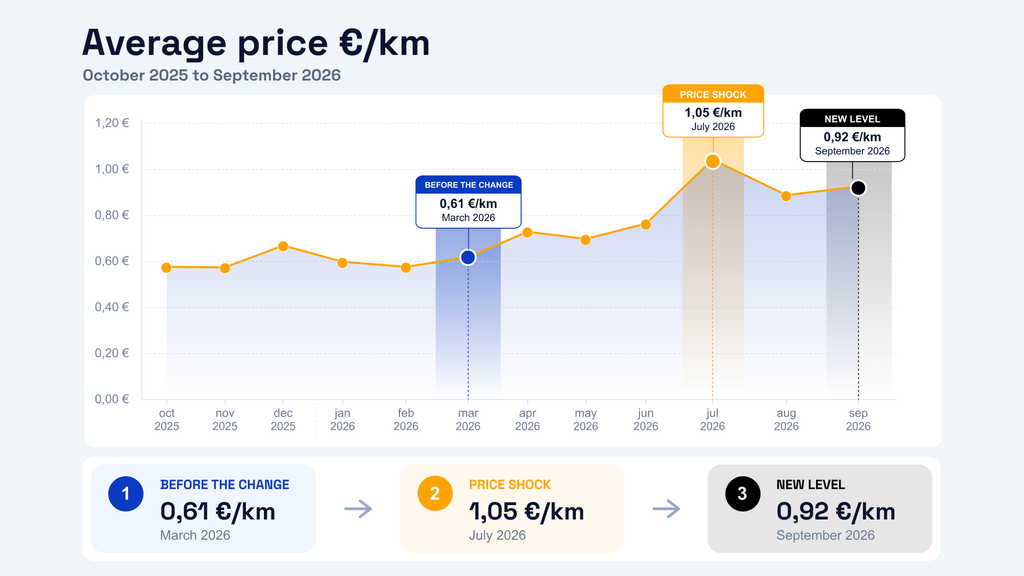
The figures suggest that the market is gradually recovering from July’s price shock. Nevertheless, there is still no clear indication that rates will return to their previous levels.
Weekly Data Shows Early Signs of Stabilisation. Has the Market Found a New Balance?
Looking at weekly figures gives us a clearer picture of how quickly the market reacted between late June and early July.
After several months of rates ranging mainly between €0.60 and €0.80/km, prices climbed above €1/km within just a few weeks.
The correction that followed suggests that July’s peak was a temporary response rather than a lasting price level.
However, it is still too early to determine where rates will eventually settle. For this reason, we will continue monitoring market developments and analysing the latest data.

How the Market Started to Adapt
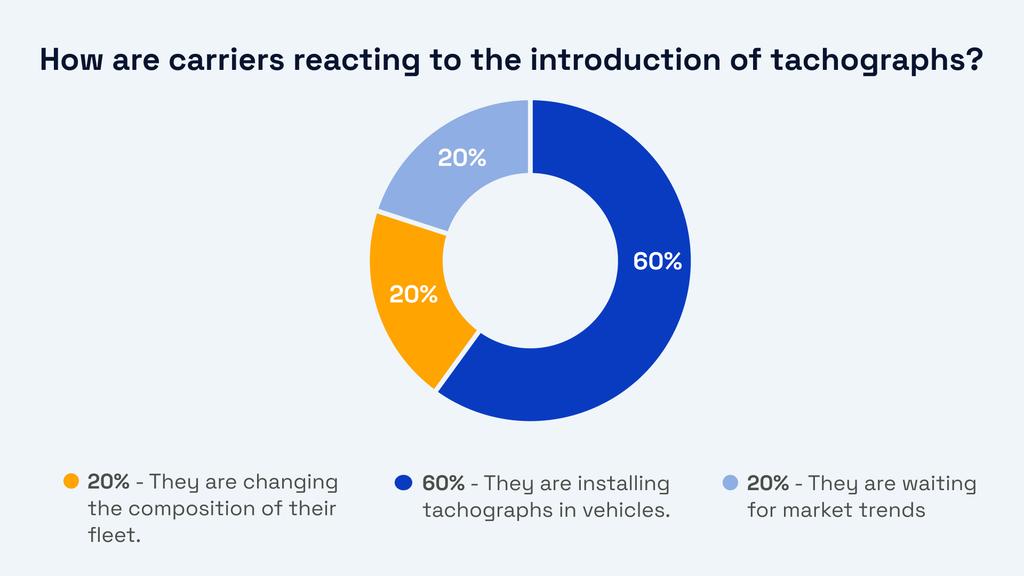
Carriers have responded to the new requirements in different ways. While most began installing tachographs in their existing vans, others adjusted their fleet composition or decided to wait and see how the market developed.
Most Carriers Chose to Install Tachographs
Our June 2026 survey found that 60% of the carriers surveyed were equipping most or all of their vans with tachographs.
Meanwhile, 20% had started diversifying their fleets, and the remaining 20% were taking a wait-and-see approach.
Smaller Vehicles Became an Alternative Where Cargo Allowed
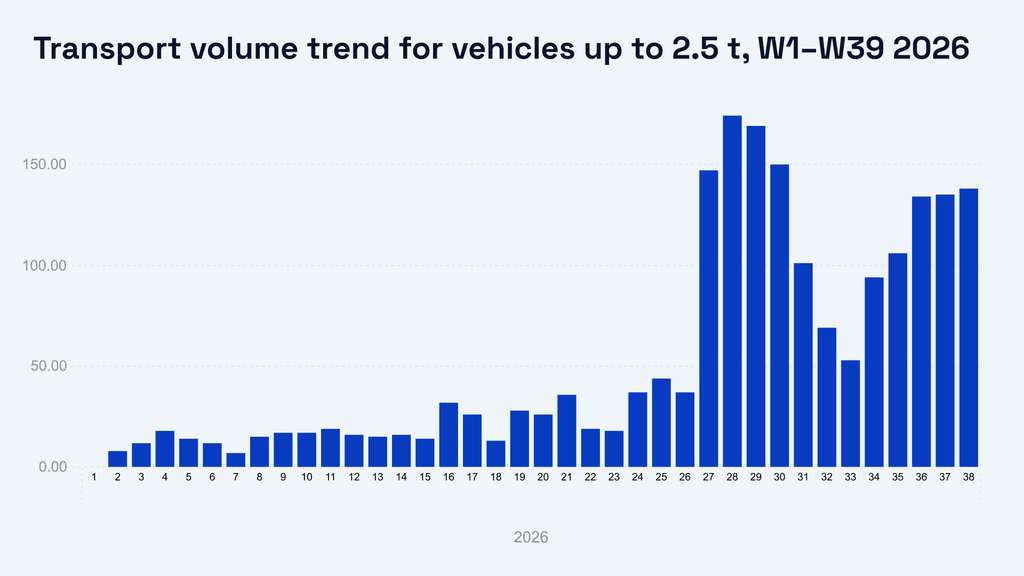
Another significant development has been the growing use of vehicles with a maximum permissible mass of up to 2.5 tonnes, which remain outside the new tachograph requirements.
For smaller and lighter shipments, these vehicles have become an alternative to vans above 2.5 tonnes.
The shift is clearly visible in our data. In the latest week covered, transport volume involving these smaller vehicles was more than nine times higher than in the first week of the year. Compared with the average weekly volume in June, it had approximately doubled.
Of course, smaller vehicles are not suitable for every shipment. Cargo weight and dimensions still determine whether this option is practical.
Even so, the trend highlights a broader change: the new regulations are affecting not only freight rates, but also the types of vehicles used to transport certain shipments.
When an 800 km Journey No Longer Means Same-Day Delivery
In express freight transport, price and vehicle availability are not the only factors that matter. Driving-time restrictions now play a greater role in determining how quickly a shipment can reach its destination.
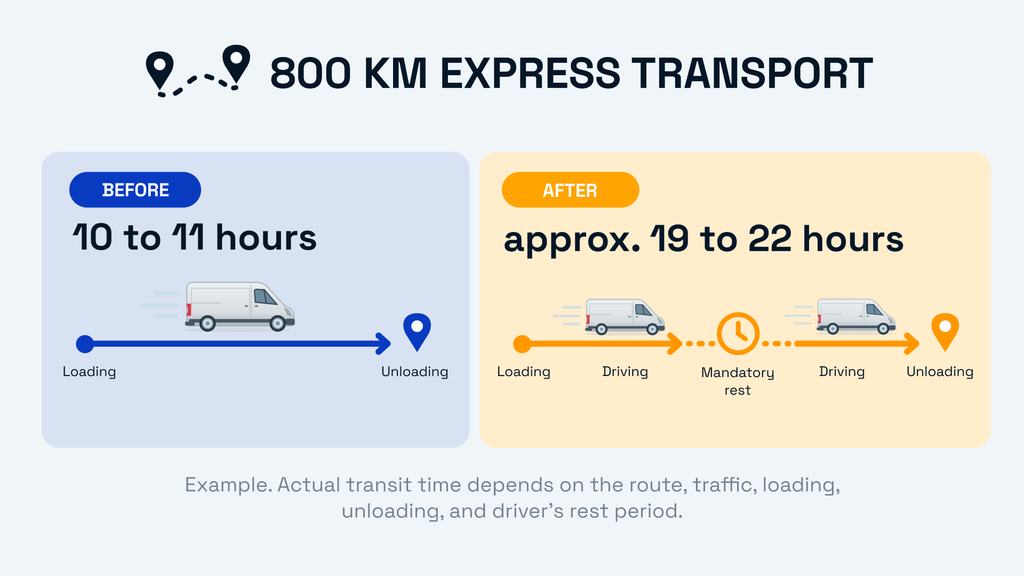
Consider an 800 km route.
Before the new requirements, an express van could complete this journey in approximately 10–11 hours of travel, without being subject to the same regulated daily driving-time limits.
Under the new rules, however, transport planning must account for the standard daily driving limit of 9 hours.
At an average effective speed of around 76 km/h, a driver can cover approximately 680 km within that period. Completing the remaining 120 km may therefore require a mandatory rest period before the journey can continue.
Consequently, a shipment that previously arrived within one day may now require a total transit time of approximately 19–22 hours, depending on the route and operating conditions.
Waiting times at loading or unloading points can also affect the overall transport schedule. Depending on how that time is classified, it may influence driver availability and the planning of subsequent driving and rest periods.
Higher Rates Are One Thing. Knowing Whether They Are Reasonable Is Another.
When freight rates change significantly within a few weeks, comparing a new quote with the price of the previous shipment is no longer enough.
A rate that was typical for the same route a few months ago may no longer reflect current capacity availability or market conditions. Equally, a higher quote does not automatically mean a carrier is overcharging.
For logistics and procurement teams, this makes access to their own historical pricing data increasingly valuable.
They need to understand how much they previously paid for a particular route, what different carriers quoted and how rates have developed over time.
Having this information available gives teams a stronger basis for comparing current offers and evaluating transport costs.
During periods of greater price volatility, the biggest challenge is not necessarily the increase itself. It is making purchasing decisions without enough context to judge whether the price in front of you reflects current market conditions.
“With rates changing like this, knowing the cost of the last shipment is no longer enough. Logistics teams need to see how prices have developed on a specific route and what quotes they have received from their carriers. Only then can they assess whether the current price is reasonable,” adds Martin Večeřa, Managing Director at Transportly.
You Cannot Control Market Rates. But You Can Control How You Buy Freight Transport.
Companies cannot change market conditions or new regulations. What they can do is gain greater control over the rates they pay and the information behind each purchasing decision.
With 4Shipper, logistics teams can send a single transport request to multiple carriers from their existing network and compare their quotes in one place.
Rather than relying on one price received by email, they can review several offers for the same shipment and make a more informed decision.
All quotes, prices and purchasing decisions remain stored in 4Shipper. The next time the team needs to arrange transport, it can compare current offers against its own pricing history instead of searching through old email threads.
Greater cost predictability also requires more than spot procurement alone.
That is why 4Shipper brings Spot Procurement and Tender & Contract Management into one workflow, allowing businesses to combine spot purchases with longer-term rates and carrier contracts
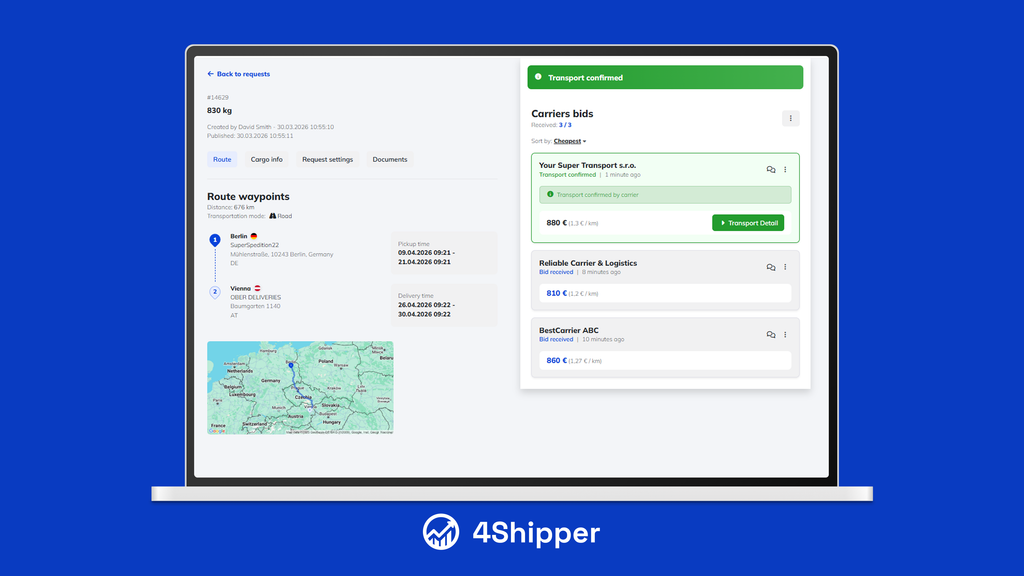
When freight rates are changing faster than usual, the goal is not to predict every market movement. It is to have enough reliable data to compare prices and make informed decisions every time you buy transport.
The Coming Months Will Reveal What Happens Next
The market is still finding its balance. Carriers are adapting to the new requirements, and the initial price surge has eased. However, the coming months will provide a clearer picture of where freight rates may settle in the longer term.
For companies buying freight transport, these developments reinforce the importance of using their own pricing data, comparing multiple carrier quotes and maintaining visibility over both spot and contract rates.
As the market continues to evolve, we will keep tracking freight rates and reviewing our data to identify emerging trends.
Want better visibility over freight rates, carrier quotes and the development of your transport costs? Contact us and see how we can help.