Efficient Transport Management for Industrial Companies

Efficient transport management is essential for industrial companies. It helps reduce delivery times, lower costs, and improve customer satisfaction. In this article, we present key strategies to successfully optimize your transport operations – with a particular focus on digital tools such as 4Shipper.
Transport Companies and Their Role
Transport companies ensure that goods are delivered safely and on time. They play a key role in the supply chain. However, not every provider is the right fit for every company. Choosing the right carrier is, therefore, a strategic step that can make a significant difference.
Route Planning for Maximum Efficiency
Effective route planning saves time, reduces fuel costs, and avoids empty runs. Modern systems help calculate optimal routes – considering traffic, weather conditions, and driving times.
Technological Support
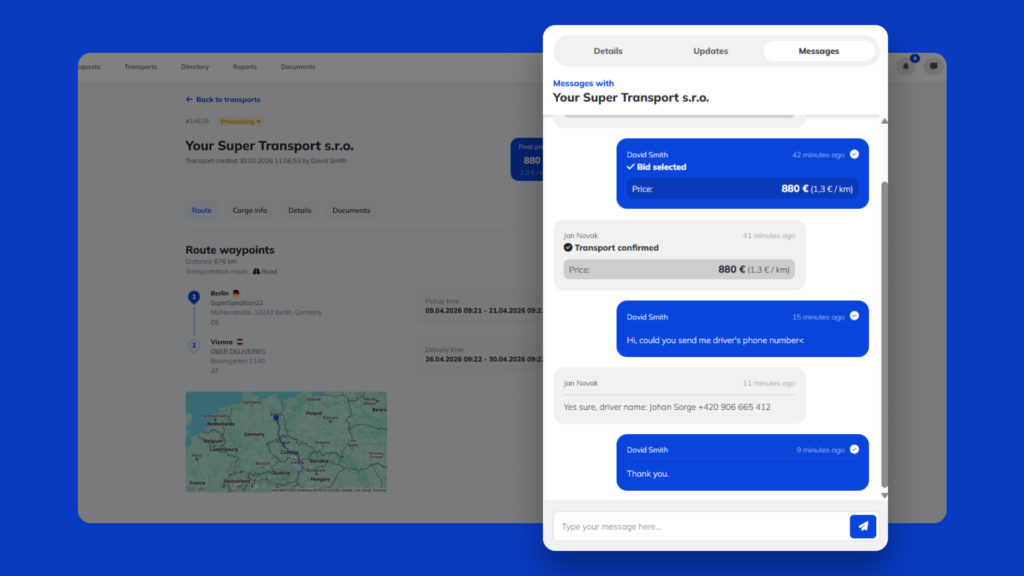
Software solutions such as 4Shipper enable companies to plan, assign, and monitor transports efficiently. Through automated tenders and digital communication with carriers, companies save significant time and gain greater transparency.
Strategic Route Optimization
By analyzing past transports, patterns can be identified and improvements implemented. Which routes are costly? Where do delays occur most often? Tools like 4Shipper automatically collect this data and support continuous optimization.
Increasing Efficiency Through Logistics Management
Holistic logistics management looks beyond transport itself and also includes warehousing, packaging, and handling. The goal is to align all processes seamlessly.
Process Optimization
Standardized workflows, automated processes, and clear responsibilities make transport operations faster and less prone to errors. Digital platforms help document processes and continuously improve them.
Team Coordination
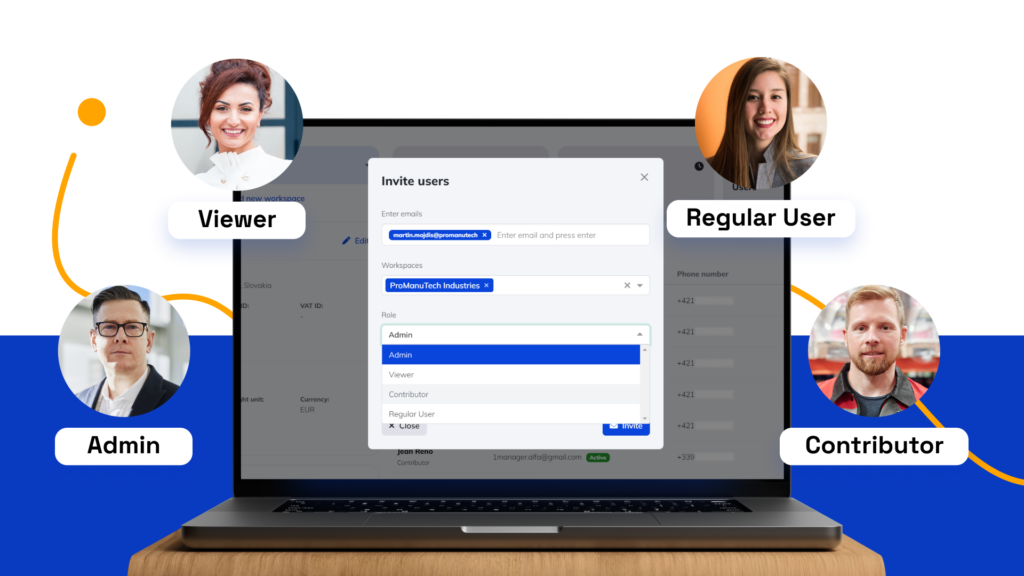
Successful transport management is a team effort. Drivers, planners, and customer service teams must work closely together. Digital tools with a shared database, such as 4Shipper, significantly improve internal communication.
Cost-Benefit Analysis in Transport Management
A low price does not always mean a good deal. It is important to evaluate total costs in relation to the service provided. This includes delivery quality, reliability, and flexibility.
Key Metrics and KPIs
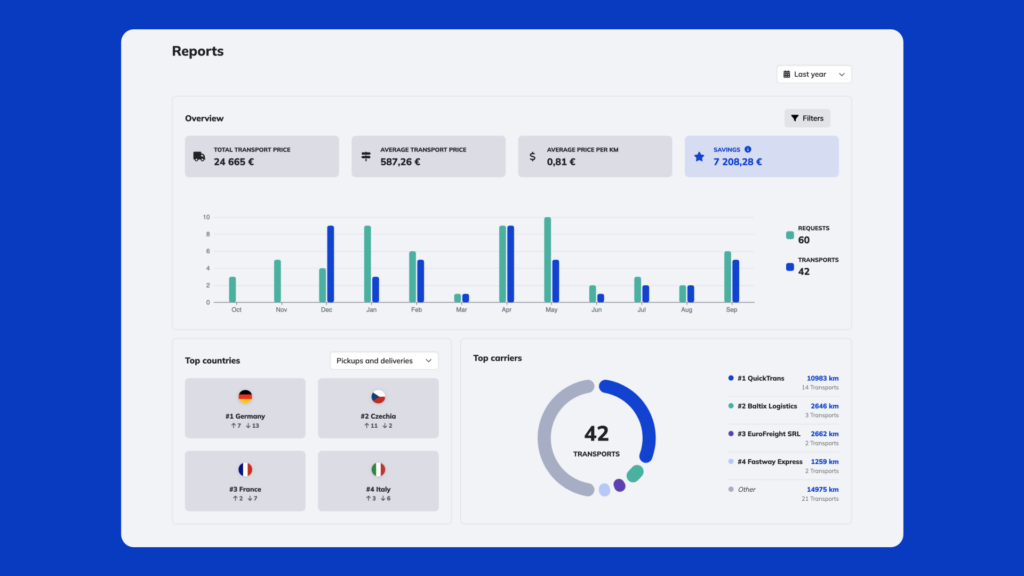
Key KPIs in transport management include on-time delivery, cost per kilometer, and vehicle utilization. Consequently, 4Shipper automatically generates reports that highlight the most frequent carriers, spending per partner, and specific areas for optimization.
Decision-Making
Based on this data, companies can make informed decisions: which partners to work with long-term, where costs can be reduced, and how to make their supply chain more resilient.
The Role of Logistics Software
Digital solutions like 4Shipper make a real difference – from the initial request, through the comparison of multiple providers, to the analysis of all transports. Everything runs on one platform, without Excel spreadsheets or email chaos.
Features and Benefits
- Centralized management of all transport requests
- Automatic comparison of offers
- Communication with carriers directly in the app
- Reports on used carriers, kilometers driven, and total costs
Integration into Existing Systems
4Shipper is web-based and can be easily integrated into existing processes. It works independently of ERP systems and is ready to use immediately – without lengthy IT projects. The security of your data is ensured.
Innovative Transport Solutions
The transport industry is evolving rapidly, with sustainability, digitalization, and technologies like AI and IoT becoming increasingly important. Therefore, companies that adopt smart solutions like 4Shipper early gain a clear competitive advantage.
Trends and Developments
- Real-time tracking is becoming standard
- CO₂ optimization is becoming mandatory
- Platform solutions are replacing manual processes
- Data-driven decisions are replacing gut feeling
Case Studies of Successful Implementations
- Up to 20% lower transport costs
- 50% faster tendering processes
- Better visibility of all carriers and their performance
Read our new Case Study: When a Technology Leader Decides to Digitize Logistics with 4Shipper
If you want to future-proof your transport management, focus on data, strategy – and the right digital tools.